Services
Pool Equipment Inspection
Thorough examination of pumps, filters, heaters, and other mechanical components for proper function.
Get a free quote
Need Pool Equipment Inspection? Let's talk.
Tell us what you need. We come back the same business day.
+18322417071A pool is only as reliable as the equipment running behind the scenes. Pumps, filters, and heaters work continuously to keep water circulating and chemically balanced, and even minor wear in one component can throw off the entire system. An equipment inspection is how we catch those problems before they turn into a cracked pump housing, a burned-out motor, or a heater that stops working right before you need it most.
Most pool owners think about equipment only when something breaks. But small issues rarely announce themselves loudly. A pump that's drawing more power than it should, a filter with a slow pressure creep, or a heater with a failing igniter all give off subtle signs long before total failure. If your pool water looks cloudy despite normal chemical levels, if you hear new noises from the equipment pad, or if your energy bill has crept up without explanation, those are all reasons to have the system checked.
What the inspection covers
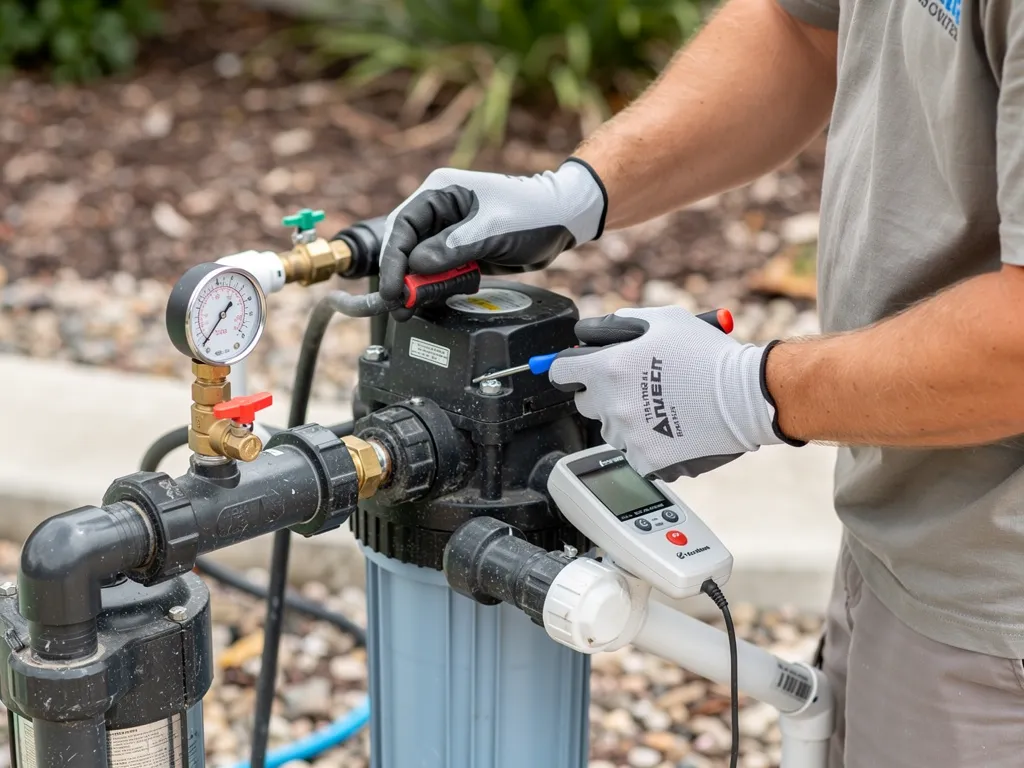
We start at the pump, checking the motor for unusual vibration or noise, inspecting the seals for leaks, and confirming the impeller isn't clogged or worn. From there we move to the filter, whether sand, cartridge, or DE, checking pressure readings against baseline numbers and looking for signs the media needs cleaning or replacing. Heaters get checked for proper ignition, exhaust flow, and any scaling or corrosion on the heat exchanger. We also look at valves, gauges, and the plumbing connections between components, since a small air leak on the suction side can cause problems that get blamed on the pump when the real issue is elsewhere.
We test electrical connections at the equipment pad for corrosion or loose wiring, which is a common cause of intermittent equipment shutdowns. Timers and automation controls, if your system has them, get checked to confirm they're actually running the schedule you think they're running. It's not unusual to find a timer that's been running the pump two extra hours a day for months without anyone noticing.
What to expect on the day
A technician will need clear access to your equipment pad, so it helps to have the area around pumps, filters, and heaters clear of stored items, lawn equipment, or overgrown landscaping. The pool doesn't need to be drained or taken offline for a standard inspection. We'll run the system through its normal cycle, take pressure and flow readings, and open up the filter housing to inspect the media. If we find something that needs attention, we'll explain what we found, why it matters, and what the options are, including what happens if it's left as is.
A few mistakes come up again and again. Owners sometimes ignore a slowly rising filter pressure gauge, assuming a few extra PSI doesn't matter, when in fact it's a sign the filter is working harder than it should and losing efficiency. Others run pumps for far more hours than the pool actually needs, which shortens equipment life without improving water quality. And it's common to see heaters that haven't been checked in years, since they only get used seasonally and problems can sit hidden until the first cold snap.
What separates a useful inspection from a rushed one is whether the technician actually documents readings and compares them over time. A single visual check tells you very little. Tracking pressure, amperage, and flow numbers across visits is what reveals a slow decline before it becomes a breakdown. We keep records for every pool we service so that patterns show up early, and we explain findings in plain language rather than technical shorthand, so you understand what's actually happening with your equipment and can make an informed decision about repairs or replacement timing.
- Catches equipment failures before they become expensive
- Protects your pool investment long term
- Reduces unexpected repair bills
- Improves energy efficiency of pumps and heaters
- Extends the working life of your equipment
- Clear explanations, no confusing technical jargon
- Documented readings tracked over time
- Works alongside your regular maintenance plan
How it works
Three steps, no surprises
Visual and access check
We clear a working view of the equipment pad and check for obvious wear, corrosion, or leaks around pumps, filters, and heaters.
Operational testing
The system is run through its normal cycle while we record pressure, flow, and amperage readings on each component.
Findings and recommendations
We walk through what we found in plain terms and outline any repairs or adjustments worth considering.
Service areas
Pool Equipment Inspection near you
We cover the towns below for pool equipment inspection. Each page lists local response times.
Questions
Frequently asked
How often should equipment be inspected?
Most pools benefit from a thorough inspection at least once or twice a year, with more frequent checks if the pool sees heavy use or the equipment is older. Pools already on a weekly maintenance plan often get lighter equipment checks built into each visit, with a deeper inspection periodically.
Will the pool need to be shut down for the inspection?
No, a standard inspection is done while the system runs its normal cycle. If a repair is needed afterward, that may require temporarily shutting down a specific component, but the inspection itself doesn't require draining or closing the pool.
What if you find a problem during the inspection?
We'll explain what we found, what's causing it, and what the realistic options are, including doing nothing for now if the issue is minor. The decision on repairs is always yours.
Can I do this myself instead of hiring someone?
You can visually check for obvious leaks or noises yourself, but diagnosing pressure readings, electrical issues, or early motor wear takes equipment and experience most owners don't have on hand. Catching subtle problems early is where a trained eye makes the biggest difference.
Does an inspection cover the pool heater too?
Yes, heaters are included in a full equipment inspection, covering ignition, exhaust flow, and signs of scaling or corrosion. Heaters that sit unused for months at a time are especially worth checking before the season they're needed most.
What's the difference between an inspection and regular maintenance?
Regular maintenance focuses on water chemistry and cleaning, while an equipment inspection specifically examines the mechanical components that keep the system running. Both matter, but they address different parts of pool care.
Need Pool Equipment Inspection? Let's talk.
Tell us about the job and we will come back with a straight answer and a firm price.