Services
Pool Skimming and Debris Removal
Surface and underwater cleaning to remove leaves, dirt, and debris from your pool.
Get a free quote
Need Pool Skimming and Debris Removal? Let's talk.
Tell us what you need. We come back the same business day.
+18322417071Pool skimming and debris removal is the most basic and most frequently needed part of pool care, and it is also the one that gets skipped most often when owners try to keep up with their pool on their own. Leaves, pollen, grass clippings, insects, and airborne dust settle on the water surface within hours of a pool being cleaned. If that debris isn't removed regularly, it sinks, breaks down, and starts feeding algae growth or clogging the skimmer baskets and filtration system. What looks like a minor cosmetic issue turns into a chemistry problem and eventually a mechanical one.
You need this service if you notice leaves or debris sitting on the water for more than a day, if the water looks slightly cloudy even though chemical levels test fine, or if you find debris settling on the pool floor and steps despite regular use of an automatic cleaner. Pools near trees, under patio covers, or exposed to wind need more frequent skimming than pools in sheltered yards. Spas attached to the pool need the same attention, since jets and low water turnover in a spa make it easy for debris to accumulate unnoticed.
What the work involves
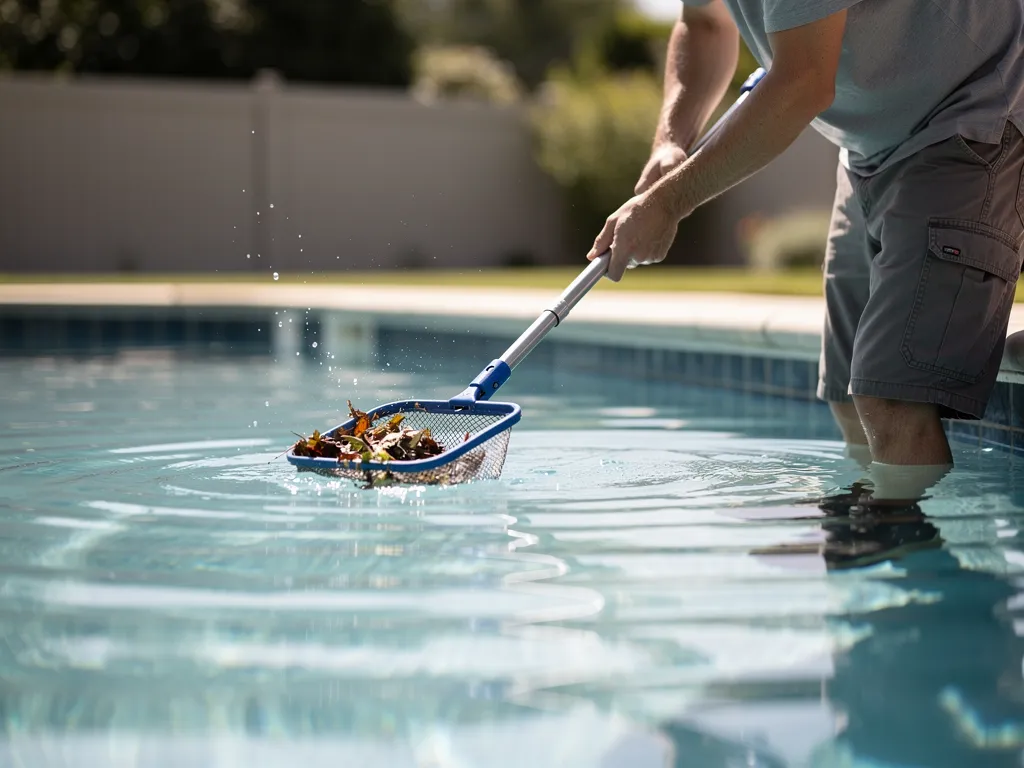
A thorough skimming and debris removal visit starts at the surface. We use a fine-mesh net to pass across the entire water surface, working in overlapping rows so nothing gets missed, paying extra attention to corners, steps, and areas near return jets where debris tends to collect. After the surface is clear, we move underwater with a leaf rake or vacuum head, covering the floor and walls to catch anything that has already sunk. Skimmer baskets and, where accessible, pump baskets are emptied and rinsed, since a clogged basket reduces circulation even if the water looks clean. On pools with a spa, we clean that separately, since the smaller volume of water and different jet pattern mean debris tends to concentrate in different spots.
What to expect on the day
A technician will typically be at the pool for a set portion of a longer maintenance visit, since debris removal is usually paired with basic water testing and equipment checks. You don't need to be present for a routine skimming visit, though we do ask that pool covers, if used, be off or accessible before we arrive. If there has been a recent storm or heavy leaf drop, let us know ahead of time so we can plan for a longer visit, since storm debris can be significantly heavier than typical daily buildup.
A few things affect how long a visit takes and how often it needs to happen. Pools surrounded by mature trees need skimming more than once a week during shedding seasons. Pools that see heavy swimmer traffic accumulate sunscreen film and hair debris faster than lightly used pools. Wind direction and nearby construction or landscaping work can also increase debris load unpredictably. We adjust visit frequency and time on site based on these conditions rather than applying the same routine to every pool regardless of its surroundings.
Common mistakes and what sets good work apart
A common mistake we see from owners trying to handle this themselves is skimming only the surface and assuming the job is done, while debris that has already sunk keeps decomposing on the floor and clouding the water. Another mistake is neglecting the skimmer basket, letting it fill until water flow to the pump drops off, which reduces filtration efficiency across the whole system. Skipping the spa, if there is one, is also common, since it's easy to assume the smaller body of water needs less attention when in practice it can accumulate debris just as fast in a smaller space.
Good debris removal work is thorough and consistent rather than occasional. It means checking baskets every visit, not just when they look full, and inspecting the pool floor even when the surface looks clean, since sunken debris is often invisible from a quick glance. We treat skimming as connected to the rest of a pool's health rather than a cosmetic task on its own, because clean water starts with keeping organic material from breaking down in the first place.
- Prevents algae growth from decaying organic debris
- Keeps skimmer baskets clear for proper water flow
- Reduces strain on pool pump and filtration system
- Covers both surface and underwater debris removal
- Includes spa cleaning for pools with an attached spa
- Frequency adjusted for trees, wind, and swimmer use
- Helps keep water clear between chemical treatments
- Part of a broader routine maintenance approach
How it works
Three steps, no surprises
Surface skimming
We pass a fine-mesh net across the entire water surface in overlapping rows, focusing on corners and areas near jets where debris collects.
Underwater and basket cleaning
A leaf rake or vacuum head clears debris that has settled on the floor and walls, and skimmer and pump baskets are emptied and rinsed.
Spa and final check
If a spa is attached, it is cleaned separately, and the pool is given a final visual check before we move to the next stop.
Service areas
Pool Skimming and Debris Removal near you
We cover the towns below for pool skimming and debris removal. Each page lists local response times.
Questions
Frequently asked
How often does my pool need skimming?
It depends on your surroundings and how the pool is used. Pools near trees or exposed to wind typically need skimming more than once a week, while sheltered pools with light use can go longer between visits.
Will skimming alone keep my water clear?
Skimming removes organic debris before it breaks down, which helps prevent cloudiness and algae, but it works alongside chemical balancing and filtration. It's one part of a full maintenance routine rather than a complete solution on its own.
Do you clean the pool floor too, or just the surface?
Both. We skim the surface first, then go underwater with a leaf rake or vacuum to remove debris that has already settled on the floor and walls.
What happens if I skip debris removal after a storm?
Storm debris left in the water can clog skimmer baskets, block circulation, and start decomposing, which contributes to algae growth and cloudy water. It's best to have the pool serviced as soon as possible after heavy leaf or debris drop.
Do you clean my spa if it's attached to the pool?
Yes, if your pool has an attached spa, we clean it separately from the main pool, since debris tends to collect differently in a smaller volume of water with different jets.
Can I skim the pool myself between visits?
You can, and light skimming between visits helps keep debris from settling, but regular professional service ensures baskets, underwater areas, and the spa are also checked and cleaned consistently.
Need Pool Skimming and Debris Removal? Let's talk.
Tell us about the job and we will come back with a straight answer and a firm price.